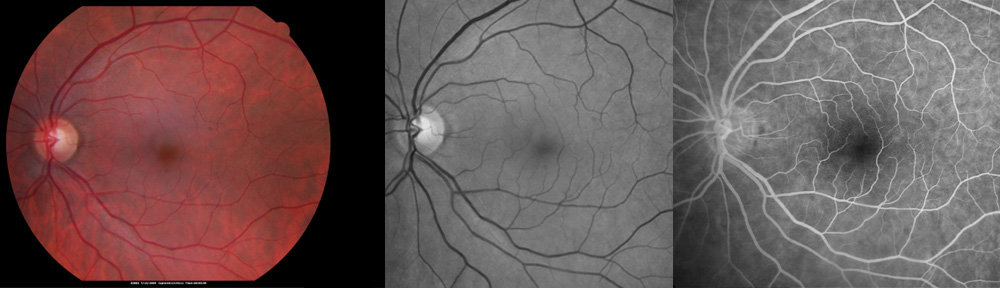
With all of the technological advances in eye care, there are many ways to visualize the eye and a retina scan is often offered during an eye examination. A retina scan is another name for a photograph of the retina. Is it really needed? Is it worth the money? The answers to these important questions depend on the circumstances of the eye exam.
Is a retina scan really needed?
For routine eye exams in which the patient has no symptoms of a retinal condition, a retina scan may not be necessary. Important symptoms of retinal problems include: straight lines looking crooked, a blind spot or missing area in the vision, a loss of peripheral vision. If these symptoms are present, a retina scan or a referral to a retinal specialist may be in order.
What types of retina scans are available?
The following are scans that may be ordered by the eye doctor:
- Color Fundus Photography: an image of the retina as seen by the examining eye care specialist. It may be helpful to monitor and compare lesions from visit to visit.
- Fundus Autofluorescence Photography: an image of the fluorescence of the retinal layers taken with a short-wave light. Helpful in diagnosis of many degenerative conditions such as age-related macular degeneration.
- Optical Coherence Tomography (OCT): a cross-sectional image of the retina (or other part of the eye). This test is helpful to diagnose fluid leakage in or under the retina and to assess macular hole.
- Fluorescein Angiography: a specialized image of the retina taken after an organic dye is injected into the vein of your arm. It shows blood flow and sites of abnormal leakage.
- Indocyanine Green Angiography: similar to fluorescein angiography, but with a different dye that is used to see deeper into the eye to examine the choroid. Useful in macular degeneration and posterior uveitis.
Is a retina scan worth the money?
An examination of the retina is included in a complete eye exam without further charge. A retina scan is sometimes used as an additional step (with additional charges) if the examining doctor is not comfortable with his/her ability to diagnose a retinal condition. The cost of a retina scan may be avoided in some cases by choosing an eye doctor who is comfortable examining the dilated eye for retinal problems without the use of a scan.