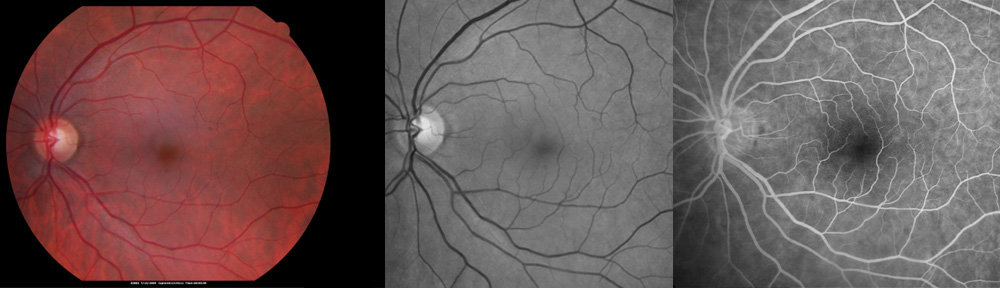

What is familial exudative vitreoretinopathy (FEVR)?
Familial exudative vitreoretinopathy (FEVR) is a condition in which the retinal blood vessels have not developed completely at birth. The retina is a thin layer of nerve tissue, which lines the inside of the eye like the film in a camera. In the eye, light is focused onto the retina, which “takes the picture” and sends the image to the brain. Blood vessels give nutrition to the retina. In FEVR the underdeveloped blood vessels may cause no problems, but in other cases they may leak fluid into the retina, bleed into the eye, and/or cause scar tissue to form. Scar tissue may cause retinal detachment. These complications may lead to loss of vision.
What causes familial exudative vitreoretinopathy (FEVR)?
This condition is inherited and many genes are known to cause FEVR. They generally involve the genes direct blood vessel development and maintenance. Because of the many genes involved, FEVR may or may not be detected in other family members. There are no known things you can do to make it better or worse. There are no known nutritional supplements known to help.
What symptoms does familial exudative vitreoretinopathy (FEVR) cause?
The symptoms depend on the severity of the condition and this may vary from patient to patient even within the same family. Any number of symptoms may be caused by FEVR. In severe cases, young children may be affected with loss of vision. Milder cases often present in adulthood with floaters and may be totally without symptoms at all.
How is familial exudative vitreoretinopathy (FEVR) diagnosed?
FEVR is diagnosed on a routine eye examination; however, it may take an experienced examiner to make the diagnosis. A dilated eye exam or wide-angle retinal photographs are often used to diagnose FEVR. Findings may include abnormal blood vessels in the retina, abnormal leakage (exudates or subretinal fluid), bleeding, scarring, and/or retinal detachment.
Genetic testing is available to confirm the diagnosis. However, the diagnosis is usually based on clinical findings on examination. Furthermore, testing may be expensive and does not alter the treatment plan. Finally, half of patients with FEVR do not test positive for the know gene variants. There are some genes that cause FEVR that are yet to be discovered.
How is familial exudative vitreoretinopathy (FEVR) treated?
The type of treatment needed depends on the severity of FEVR in a given patient. In mild cases no treatment is needed, but follow up exams are important to detect progression. In more severe cases in which blood vessels are leaking, laser or cryopexy is often used to seal down the abnormal blood vessels. In advanced cases, vitrectomy surgery is required to save vision.
Why is it important to know about familial exudative vitreoretinopathy (FEVR)?
Although not a common condition, FEVR is likely under-recognized. It is important because FEVR can cause a loss of vision, which may be preventable if detected early. Recognizing and reporting important symptoms may be critical to save vision. Report new floating spots or fibers to your doctor promptly. An examination may disclose bleeding, which may be treated with laser. The appearance of a dark curtain or shadow from the side-vision like an eclipse of the moon is an even more serious symptom that may indicate retinal detachment and require major eye surgery to repair. Routine eye exams may also detect problems before symptoms arise. Finally, family members may choose to be examined to make sure they have no evidence of FEVR.
Copyright ©2026 Designs Unlimited of Florida. All Rights Reserved.


